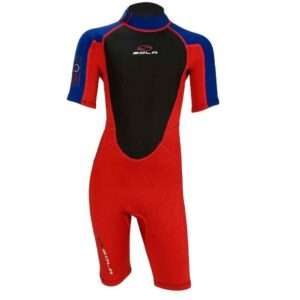
A 5/4 suit from December to April, 4/3 through spring and autumn, and 3/2 across summer. If you only want one suit and you swim or surf all year, 4/3 covers the widest range of conditions.
What is the difference between a swimming wetsuit and a surfing wetsuit?
Swimming suits use thinner, more flexible neoprene at the shoulders and add buoyancy in the legs to lift them towards the surface. Surfing suits are thicker through the body and reinforced at the knees, built for sitting in cold water rather than for stroke efficiency.
How tight should a wetsuit be?
Tight enough to feel restrictive standing on dry land. No loose folds behind the knees or in the lower back, and a neck seal that is snug without choking. Neoprene softens in water, so a suit that feels comfortable in the shop will usually flush.
How should a wetsuit be looked after?
Rinse it in fresh water after every session, turn it inside out to dry away from direct sun, and hang it over a wide hanger rather than folding it. Leaving it bunched in a wet bag is what ends most wetsuits early.