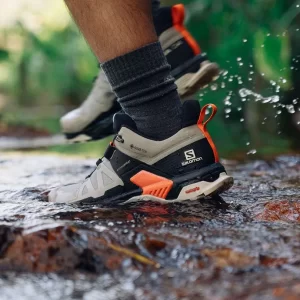
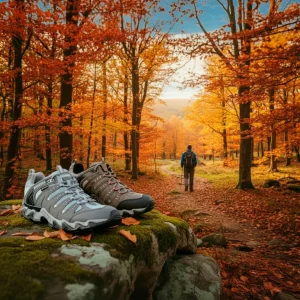
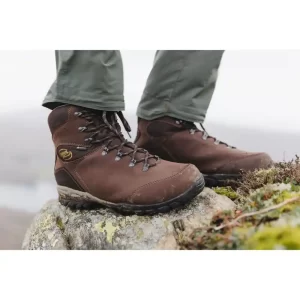
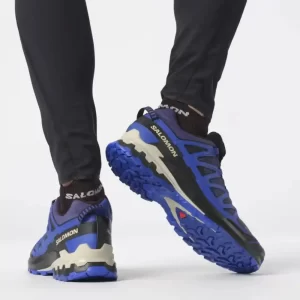
Low-cut shoes are fine on waymarked trails with a light day pack. Once you are carrying weight, crossing bog or moving over loose rock, a mid or high boot gives the ankle support and water protection a low shoe cannot. Many walkers keep both and choose by route.
What should I look for in a boot for wet, boggy ground?
A waterproof membrane and a deep, widely spaced lug pattern. Closely spaced lugs pack with peat and stop gripping. A higher cut also keeps water out for longer when you step into something deeper than expected.
How do I break in new hiking boots?
Stiff leather boots want two or three walks of an hour or two before a full day, wearing the socks you will hike in. Softer fabric boots are generally comfortable straight away. Breaking in shapes the upper; it will not fix the wrong size.
Leather or fabric hiking boots?
Leather is heavier and needs waxing, but it supports a pack better and can often be resoled, so it lasts far longer. Fabric is lighter and comfortable immediately, but it softens with use and is replaced rather than repaired.